
How to move employee feedback into action (without overcomplicating it)
A practical guide for HR leaders on moving from survey results to meaningful action. This post breaks down the three levels of action: strategic, manager, and senior‑leader and shows how one well‑chosen, well‑executed intervention can drive far greater impact than over engineered action plans
How to Move Employee Feedback into Action (Without Overcomplicating It)
TL;DR: Effective action isn’t about doing more; it’s about choosing the one or two things that will actually shift the experience. Prioritise, act visibly, and avoid “survey theatre.” Make it the shared project across senior managers, and many other elements fall into place.
The “without overcomplicating it” part matters. Turning employee feedback into meaningful action is the part of employee listening that often spirals into dashboards, steering groups, and 80‑slide presentations that ultimately don’t change anyone’s experience.
I’ve spent my career running surveys across industries and global regions. I’ve helped exec teams improve engagement without launching a single “You Said, We Did” campaign, and I’ve sat in enough boardrooms and spoken to enough “on-the-ground” operators to know exactly where feedback gets stuck.
In practice, survey‑driven action falls into three categories:
- Strategic actions: Organisation‑wide shifts to the people, culture, or operating model.
- Manager‑level actions: Local improvements owned by line managers.
- Senior‑manager / HRBP actions: Addressing cross‑team issues, systemic blockers, or underperforming managers.
Before we get into each level, one core principle:
One well‑chosen, well‑executed action beats ten superficial ones.
When everything is a priority, nothing is.
1. Strategic-Level Action
Strategic action focuses on the systemic issues that only the executive team can choose to resolve.
Diagnose the real issue
Start with:
- Organisation‑level scores
- Drivers of key people outcomes (usually engagement)
- Comparisons to benchmarks
- Automated free‑text analysis for themes
- Demographic hotspots
Then walk your exec team through the story behind the data. Their perception of “what people are actually saying” is the most powerful unlock.
The fewer slides you deliver, and the clearer the story, the more likely people are to agree.
Act where it counts
Use strategic levers:
- If trust in leaders is low: Ask leaders to read free‑text comments, acknowledge the issues publicly and transparently, and outline the shifts they will make as a team.
- If systems or technology are blockers: Build them into CIO‑level roadmaps (a recurring theme in organisational effectiveness).
- If cross‑team collaboration or communication is an issue: Address this in operations/comms strategies.
- If it sits in HR’s world: Bake it directly into your People Strategy.
These aren’t the only areas, but I hope this gives you the shape of it – it’s about strategy, and not just your listening strategy.
Communicate wisely
These “big shifts” don’t always translate neatly into “you said, we did.” That’s fine. Employees rarely complain about under‑communication when their experiences are visibly improving.
2. Manager-Level Action
Managers don’t need complicated diagnostic frameworks, they need clarity, capability, and consequences.
Diagnosis made simple
Give managers clean, digestible results (ideally via your HRBP if capability is low). Then ask them to choose 1–2 focus areas and discuss them with their teams.
What drives action at manager level
- Explain why it matters: If managers understand how survey results connect to their goals and performance, they’re far more likely to act.
- Let consequences be consequences: If a manager still doesn't act, the performance review cycle will surface it.
- Separate capability vs willingness: Some managers don’t know how to act; some don’t want to. HR needs to know which they’re dealing with.
- Accept that some roles may not rely on engagement outcomes: For certain functions, chasing survey action plans won’t improve performance and your time is better spent elsewhere.
Provide support
Ensure managers have:
- Clear explanations of their results
- Guided conversations to run with their teams
- Examples of managers improving results by improving people outcomes
Employee communication
Encourage employees to discuss results directly with their line managers. This transparency creates accountability and, in the worst cases, mutiny is a valuable signal.
3. Senior-Manager / HRBP-Level Action
This is where complexity lives because senior managers oversee multiple teams, behaviours, and systemic blockers.
Diagnosis
Sit down with every senior manager (or delegate via HRBPs):
- Highlight underperforming teams
- Flag managers with concerning feedback patterns
- Summarise key themes from free‑text
Likely action routes
- Underperforming or harmful managers
If survey data suggests a manager is damaging trust or safety: treat it as an ER/disciplinary priority and rebuild trust with the team. PX Hub’s listening philosophy emphasises that action is core to demonstrating listening, and a bully being managed out the business is a pretty clear action signal. - Low performance + low engagement
This usually signals a management or process issue. Pair operational diagnostics with the feedback themes to pinpoint what to fix. - High performance + low engagement
This is goodwill‑powered performance. It works temporarily until the labour market shifts.
This is where a classic “three‑SMART-actions” plan can genuinely add value. - Low performance + high engagement You can now discount employee experience as an issue for this underperforming team. This may also point to managers who prioritise experience over results rather than holding them in balance.
Final Thoughts
Driving action from employee feedback isn’t about volume, it’s about leverage. HR teams are often small, stretched, and sitting at the centre of competing priorities. The trick is to focus on:
- Strategic changes that shift the environment
- Manager empowerment that improves daily experience
- Senior‑manager accountability that protects culture
Do those three things, and your organisation will genuinely feel the impact.
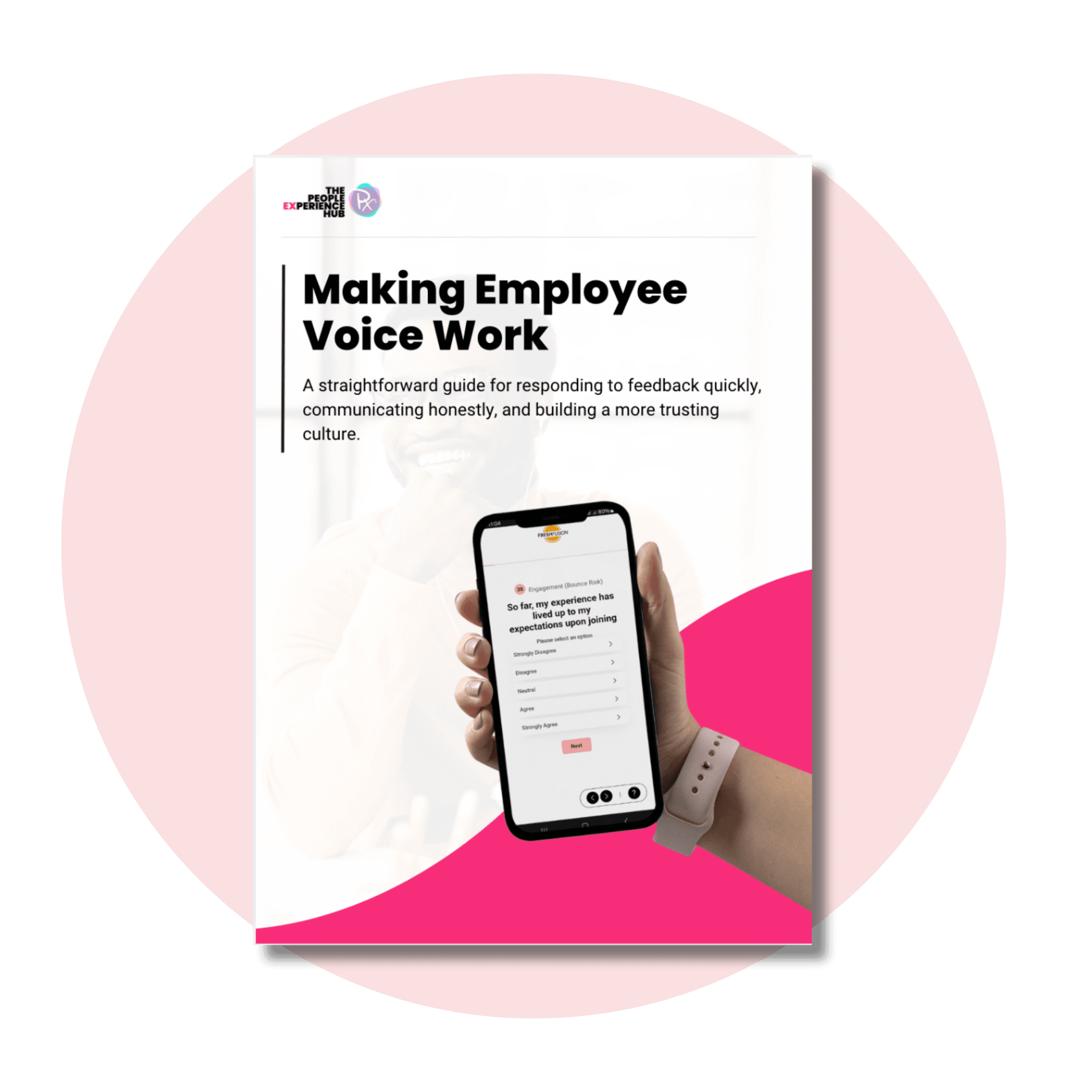
Making Employee Voice Work Guide
A straightforward guide for responding to feedback quickly, communicating honestly, and building a more trusting culture.
Download The GuideIf you want help turning this into a structured approach or want to talk about my experiences, drop me a note at Jordan@pxhub.io.
If you want to work with an employee listening provider that gets it and won’t drag you through a thousand weekly meetings just to launch an engagement survey, book a demo...